Is China About to Build the First Nuclear Power Plant on the Moon?
China's lunar nuclear plans could redefine global competition over space infrastructure and the future of sustainable Moon operations

Setting the Stage: The International Lunar Research Station (ILRS)
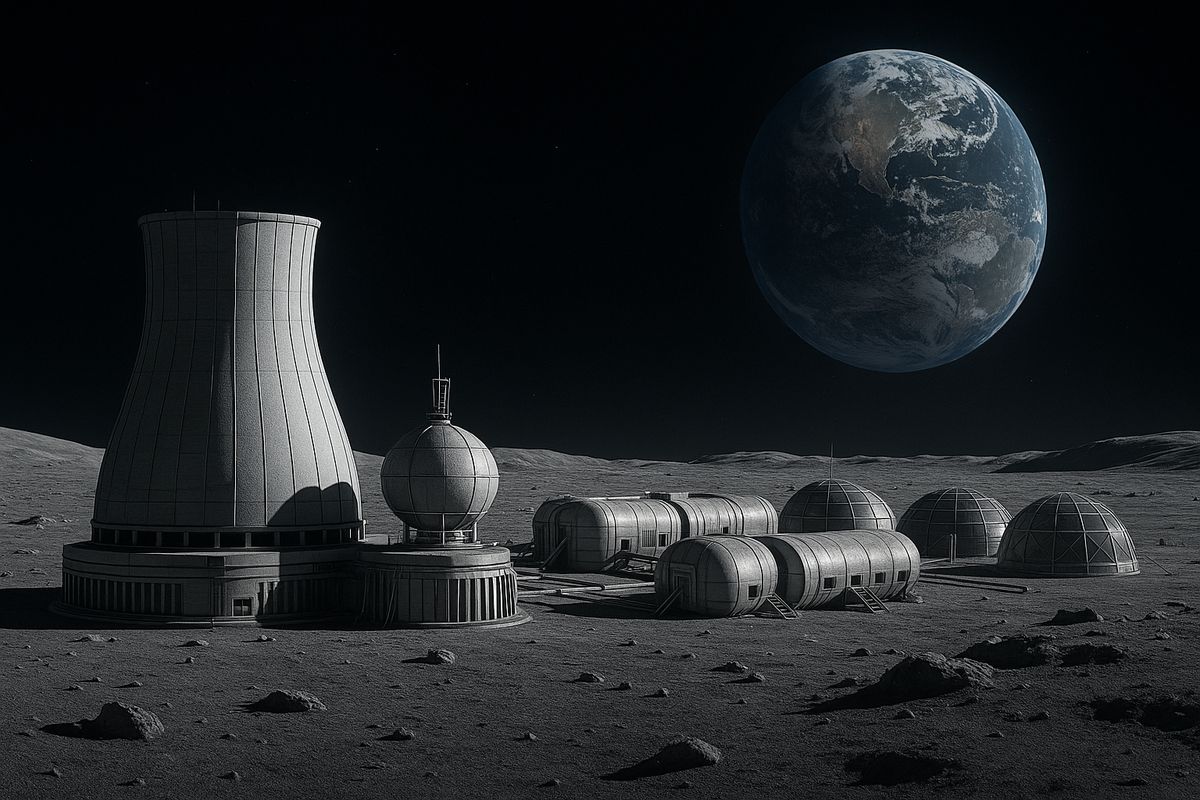
China is advancing plans to construct a nuclear power plant on the Moon to support the International Lunar Research Station (ILRS), a joint project with Russia aimed at establishing a permanent, crewed lunar base. The ILRS, first announced in 2021, is part of China’s broader ambition to become a leading space power, with goals to land astronauts on the lunar surface by 2030 and complete a functional lunar base by 2035.
A critical milestone in this roadmap is the Chang’e-8 mission, scheduled for launch in 2028. The mission will deliver a lander, rover, and experimental systems designed to explore lunar geology and test resource utilization technologies essential for sustaining a permanent lunar presence.
Nuclear Energy as a Cornerstone of Lunar Sustainability
During a presentation in Shanghai on April 23, 2025, Pei Zhaoyu, chief engineer of the Chang’e-8 mission, outlined the energy infrastructure envisioned for the ILRS. While large-scale solar arrays combined with pipelines and cables are planned to provide heating and electrical distribution, nuclear power has emerged as a key component in addressing the Moon’s extreme environmental challenges.
China and Russia are collaborating on plans to deploy a nuclear reactor on the lunar surface by 2035. Although Beijing has not formally announced its approval, the inclusion of the nuclear plan in an official presentation to representatives from 17 countries and international organizations signals strong institutional support. Nuclear energy is viewed as essential to ensuring a reliable and resilient power supply for long-term lunar operations, particularly during the two-week-long lunar nights when solar energy is unavailable.
Strategic Competition and Global Context
China’s lunar timeline parallels the United States’ Artemis program, which aims to return astronauts to the Moon by late 2027 and establish a sustainable lunar base thereafter. NASA’s energy strategy for its Artemis infrastructure initially relies on extensive solar arrays but includes nuclear options for enhanced resilience.
The race to establish a permanent presence at the Moon’s south pole reflects growing international competition over strategic space infrastructure. The south pole is particularly attractive due to its potential deposits of water ice and favorable conditions for long-term scientific exploration.
In this context, China’s pursuit of nuclear power on the Moon represents not only a technological advance but a strategic move to ensure energy independence, support scientific research, and lay the groundwork for future resource extraction initiatives.
The Broader Framework: China’s “555 Project”
In parallel with technical developments, China is promoting the “555 Project,” an initiative aimed at broadening international participation in the ILRS. The project envisions the involvement of 50 countries, 500 international scientific institutions, and 5,000 overseas researchers in lunar research activities.
This diplomatic effort seeks to position the ILRS as a global scientific platform, expanding China’s influence in international space governance at a time when the U.S.-led Artemis Accords are also building a coalition for space exploration.
China-Russia Space Cooperation: A Strategic Shift
The ILRS partnership with Russia predates the 2022 invasion of Ukraine, but the geopolitical fallout from the war has strengthened the incentives for closer space collaboration between the two countries. Western sanctions have limited Russia’s access to key space technologies, making Chinese cooperation increasingly important for maintaining Russia’s ambitions in space exploration.
According to Chinese analysts, China’s growing technological capabilities in satellite launches, lunar missions, and space station operations enable it to alleviate pressure on Russia’s space program, fostering a deeper strategic partnership that extends into the lunar domain.
Implications for Future Space Infrastructure
The construction of a lunar nuclear power plant, if successful, would mark a transformative step in space infrastructure. It would enable larger-scale human operations on the Moon, facilitate scientific research, and open possibilities for industrial activities such as mining and on-site resource utilization.
Moreover, achieving energy independence on the Moon could serve as a model for future Mars missions and deeper space exploration, where solar energy alone may be insufficient.
As China accelerates its plans for the ILRS, the integration of nuclear energy into its lunar strategy underscores the central role that reliable, scalable power systems will play in shaping the next era of space exploration and geopolitical competition beyond Earth.
References
- Amazouz, Lydia. 2025. China Aims to Develop a Nuclear Power Plant on the Moon to Power Collaborative Lunar Base with Russia. Daily Galaxy. April 25.
- Baptista, Eduardo. 2025. China Plans to Build a Nuclear Power Plant on the Moon. Independent. April 23.
- Baptista, Eduardo. 2025. China, Russia May Build Nuclear Plant on Moon to Power Lunar Station, Official Says. Reuters. April 23.
- Malyasov, Dylan. 2025. China To Build Nuclear Reactor for Moon Base. Defence Blog. April 24.
- Pashby, Tom. 2025. Russia and China Considering Building Nuclear Plant on the Moon to Power Space Station. New Civil Engineer. April 24.
- Sinha, Sujita. 2025. China-Russia Nuclear Reactor for Moon Base to Begin Construction in 2028. Interesting Engineering. April 24.
- Whitney, Jamie. 2025. China, Russia Make Plans for Lunar Nuclear Power Plant. Military + Aerospace Electronics. April 29.