Can Jared Isaacman Win America the Second Space Race?
Key takeaways from the Senate hearing on Jared Isaacman’s re-nomination as NASA administrator

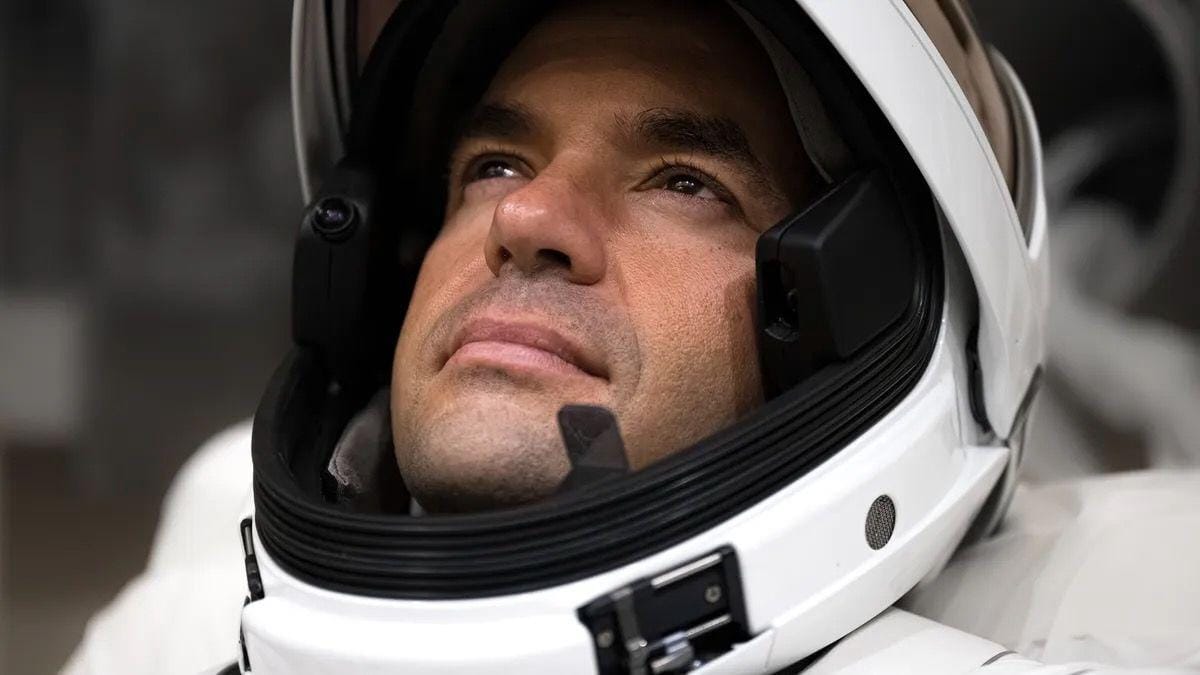
I. Accelerating U.S. Lunar and Deep-Space Strategy
- China’s rapid expansion of lunar and cislunar capabilities requires the United States to accelerate its own timelines.
- The Moon functions as geopolitical high ground with strategic consequences for science, economics, and security.
- Early U.S. presence is essential for shaping norms, governing resource access (including helium-3), and maintaining alliance confidence.
- Delayed U.S. return to the lunar surface risks ceding influence over future space governance and technological pathways toward Mars.
II. Sustained U.S. Presence on and Around the Moon
- Near term: Artemis II and III must proceed without delay to reestablish U.S. human missions beyond low Earth orbit.
- Medium term: infrastructure for permanent lunar activity is required, including power systems, landers, habitats, and logistics networks.
- Long term: a durable presence enables preparation for Mars missions and establishes U.S. leadership in the cislunar domain.
- Continuous occupation deters strategic displacement by China and attracts international partners to U.S.-led frameworks.
III. Nuclear Power and Propulsion as Strategic Technologies
- Nuclear surface power (for example, a 100 kW fission reactor) is essential for surviving lunar nights, producing propellant, and enabling Mars operations.
- Nuclear electric and nuclear thermal propulsion provide the high-efficiency and high-thrust capabilities required for deep-space logistics and fast transits.
- A “mini Manhattan project” approach is needed to maintain a technological edge and attract top engineering talent.
- China’s parallel investments in nuclear propulsion heighten the urgency for U.S. leadership.
IV. NASA and Space Force Coordination
- Avoid duplicate investment in facilities, propulsion testing, communications, and hypersonic research.
- NASA’s civilian research can generate technologies with security relevance while maintaining peaceful mission mandates.
- Joint use of Armstrong, Glenn, and other centers strengthens program efficiency and accelerates capability development.
- Coordinated planning creates a unified civil–military technological ecosystem that enhances U.S. strategic positioning.
V. Supply-Chain Security and Reducing Dependence on China
- Critical aerospace supply chains remain exposed to Chinese chokepoints in materials and components.
- Mapping of 54 critical minerals reveals vulnerabilities concentrated in Chinese processing and refining.
- U.S. strategy requires reshoring key manufacturing and deepening partnerships with trusted allies.
- Chinese dominance in minerals and components threatens U.S. spacecraft production, launch capability, and defense integration.
VI. A Competitive U.S. Commercial Space Ecosystem
- Industrial competition accelerates innovation, reduces costs, and increases mission redundancy.
- NASA should focus on frontier technologies and avoid duplicating industry capabilities.
- Clear articulation of NASA’s technological challenges enables private-sector alignment and investment.
- Early, prioritized use of the ISS for high-value research (quantum, biomedical, materials) is necessary to seed a sustainable orbital economy and ensure viable commercial stations.
VII. Earth Observation and Climate Data as Strategic Assets
- NASA’s Earth-science missions support agriculture, weather prediction, environmental monitoring, GPS reliability, and disaster-response systems.
- Data products have national-security value for military readiness and critical-infrastructure resilience.
- Free and open access to NASA data must be preserved for public agencies and researchers.
- China’s efforts to expand Earth-observation diplomacy amplify the strategic value of maintaining U.S. leadership.
VIII. Science, Exploration, and Technology as Integrated Pillars
- Human exploration, planetary science, Earth science, aeronautics, and technology development must advance together.
- NASA’s 1958 charter mandates Earth and space science as foundational missions.
- Budget constraints require maximizing scientific return, not prioritizing one pillar at the expense of others.
- Weakening any pillar diminishes U.S. diplomatic leverage, scientific leadership, and technological competitiveness.
IX. Quantum Technology and Orbital Infrastructure as Emerging Strategic Arenas
- Quantum communication, sensing, and computing have mission-critical applications and benefit from microgravity conditions.
- Accelerating ISS access for quantum research is essential to counter China’s progress.
- Economic and military systems rely on GPS, timing signals, and orbital infrastructure; any vulnerability constitutes a security threat.
- Dominance in quantum systems and resilient orbital architecture is central to long-term geopolitical stability.
X. International Space Diplomacy and Strategic Competition
- China is extending its influence through launch services, satellite networks, and expansion of its space station capabilities.
- The “space Silk Road” provides alternatives to U.S. partnerships, reducing automatic alignment with NASA.
- U.S. strategy must strengthen Artemis Accords, demonstrate mission reliability, and advance technological superiority.
- Diplomatic credibility depends on sustained U.S. performance and timely execution of major space missions.
Sources
- Isaacman, Jared. “Confirmation Hearing for NASA Administrator and Assistant Commerce Secretary Nominees.” Hearing. December 3, 2025.